Bushfire risk to increase over summer

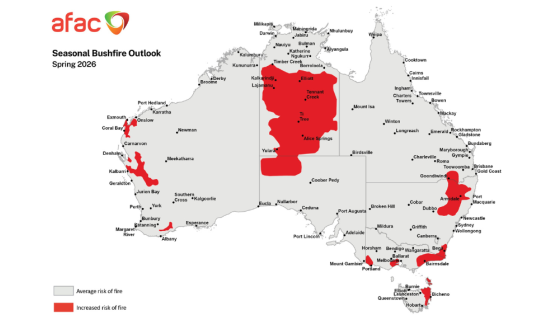
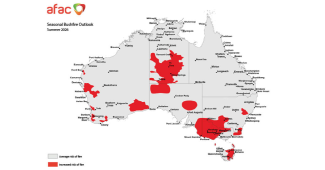
Map of Australia showing areas with increased risk of bushfires in red. Includes patches of west and southeast WA, most of NT south of Elliott and Lajamanu, large area north of Port Augusta in SA, most of VIC west of Melbourne and across the border into SA and north into NSW including around Griffith, the East Gippsland area of VIC and around Bega in NSW, the Hunter region of NSW west of Newcastle, and the eastern half of TAS including Flinders Island plus King Island.
On this page

Bushfire risk to increase over summer

Map of Australia showing areas with increased risk of bushfires in red. Includes patches of west and southeast WA, most of NT south of Elliott and Lajamanu, large area north of Port Augusta in SA, most of VIC west of Melbourne and across the border into SA and north into NSW including around Griffith, the East Gippsland area of VIC and around Bega in NSW, the Hunter region of NSW west of Newcastle, and the eastern half of TAS including Flinders Island plus King Island.
Written
  • Preparedness
  • Bushfire

At the start of every season, the Australian and New Zealand Council for fire and emergency services (AFAC) releases the seasonal bushfire outlook. Heading into summer and peak bushfire season for much of the country, the Summer Outlook shows there is an increased risk of fire across parts of most states and territories.

The outlook points to heightened risk of fire this summer in:

  • the eastern half of Tasmania, including Flinders Island, and King Island
  • parts of Western Australia, mainly in the southeast and scattered parts of the west and southwest  
  • parts of South Australia  
  • large parts of the Northern Territory south of Elliott and Lajamanu
  • large parts of Victoria west of Melbourne, across the north of the state and East Gippsland  
  • the Hunter, southeastern and southwestern regions in New South Wales.

The increased risk for these regions during the summer period (December to February) is due to low soil moisture, high fuel loads and forecast dry conditions.  

Below average rainfall is forecast for northern and southeastern Australia, while some parts of the east will see above average rainfall.  

Temperatures across the country are set to be above average throughout December to February. 

The outlook combines expert analysis of fuel conditions, rainfall, temperatures and climate forecasts to provide emergency services and communities with an indication of bushfire risk for the season ahead.  

Communities are encouraged to prepare early and stay informed, even in areas with a normal risk of fire this summer.  

Read more about the AFAC Seasonal Bushfire Summer Outlook.  
NEMA is prepared for the Higher Risk Weather Season

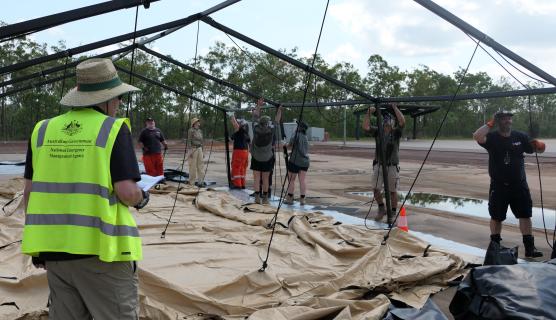
We are prepared and ready to support states and territories through this Higher Risk Weather Season (HRWS). 

We support disaster preparedness, prevention and recovery through our work, which includes:  

  • the Disaster Ready Fund (DRF), supporting projects that help communities reduce disaster risk and strengthen resilience before disasters occur

What you can do to prepare

Wherever you are in Australia this HRWS, you can do things to prepare for the impact of bushfires this summer: 

  • make sure your emergency kit is stocked and up to date 
  • review your bushfire plan with your household – make sure everyone is on the same page and knows what to do in an emergency 
  • if you live in a house, do some home and yard maintenance to reduce the risk from flying embers in a fire – clear the gutters, keep the lawn mowed and clear any piles of cuttings 
  • download the BOM app and turn on weather warnings 
  • day to day, keep an eye on the fire danger rating in your area. 

You can also check out the National Resilience Action Library. It brings together a collection of strategies and resources for homeowners to reduce the impacts of natural hazards. Plus, the Natural Hazards Awareness Modules complement the library and contain practical guidance for homeowners, buyers, renters and business owners to increase their resilience. 

For more information on how to prepare, see the NEMA website.