National Emergency Management Stockpile

On this page

National Emergency Management Stockpile

When Australian communities experience disasters, sometimes they need quick access to resources that can save lives, including:

  • safe emergency shelter
  • emergency power
  • clean water for drinking and hygiene.

The National Emergency Management Stockpile (NEMS) can assist Australian communities experiencing disasters by rolling out critical goods and services quickly, when states and territories ask NEMA for Australian Government support.
New investment

The Australian Government continues to invest in the NEMS.

The aim is to increase the Australian Government’s agility and speed in supporting states and territories in crisis. The NEMS supports disaster-impacted communities, when and where that support is needed most.

What increasing NEMS means

States and territories can access extra non-financial support from the Australian Government. They may choose to do this when they've used all their resources in response to severe disasters.

With more support coming from the NEMS, Australia does not have to rely as heavily on the Australian Defence Force (ADF) for disaster response. This allows the ADF to focus national defence duties, rather than domestic response and relief efforts.

3 ways NEMS Capability makes a difference

NEMS Capability has 3 components. Each part supports a rapid critical disaster response.

1. The NEMS Standing Offer Panel (Panel)

The Panel is available for use by authorised Australian Government agencies through the AusTender website.

The Panel can also be accessed through a portal by approved state and territory government agencies, including those which are not directly involved in emergency response and recovery.

Local councils can easily become customers of the Panel and purchase goods and services to help their communities prepare for, respond to and recover from emergencies. 

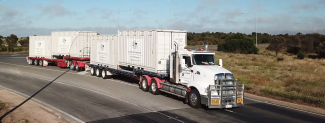
A large road train truck on a highway with bush in the background, with 4 white containers on its 2 trailers. The containers have the Australian Government crest logo on them.

All levels of Australian governments can use the Panel to buy things such as temporary flood barriers, non-medical biohazard kits, and temporary accommodation camps. The ability to purchase through the Panel supports the reduction of the impacts of emergencies and disasters and enhances preparedness, response and recovery capabilities. 

Agencies can also buy services like transport, warehousing and specialised engineering services, which can be used to quickly assess damage to roads. Other specialist services such as humanitarian aid, engineering and technical evaluations, and specialist ‘build and take-down’ crews for emergency shelter camps and accommodation are also available.

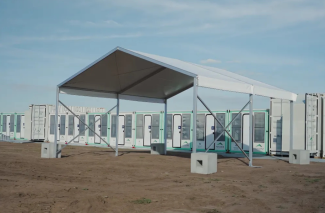
Temporary buildings, like containers, lined up on a dirt area with a large barn-like shelter erected in front.

The Panel is regularly opened for tender and looking for new suppliers to contribute to Australia’s emergency preparedness and response efforts. You can register for alerts on AusTender or find out more under SON4050420 and in the Resources list below.

2. The physical NEMS Stockpile (Stockpile)

The Stockpile was established in 2023. The Stockpile is made up of re-deployable assets and single-use consumables. This includes quick to deploy and set up off-grid emergency shelter camps. There are also water desalination and purification systems, high-output power generators and flood prevention systems. The Stockpile can be used when states and territories ask for non-financial help from the Australian Government.

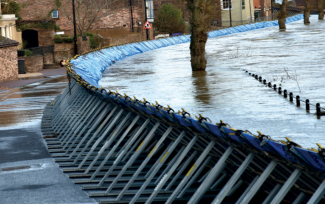
A flood barrier propped up from the left with many angled rods, with floodwater flowing on the right side and some tree trunks and the top of a fence visible in the water.

3. Memoranda of Understanding and Strategic Partnerships

NEMS has built relationships with other Australian Government humanitarian and crisis response capabilities. This helps make sure that governments can keep supporting Australian communities during and after disasters.

Last updated