Understanding AusAlert – the new national warning system

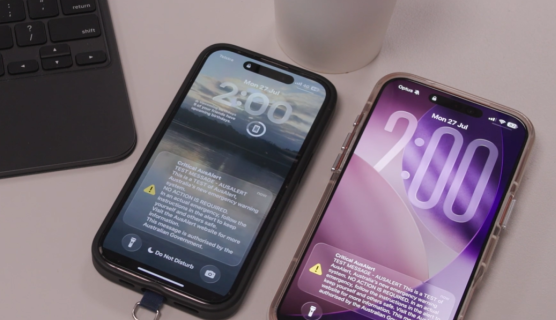
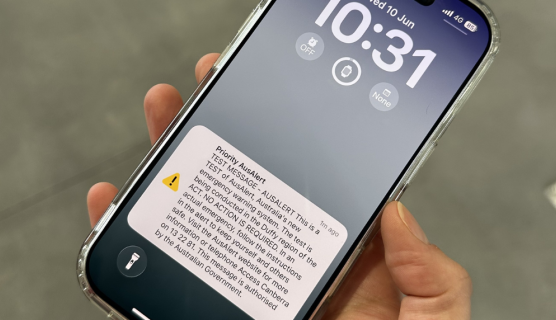
Photo of hands holding a phone with the AusAlert test message on the screen.
On this page

Understanding AusAlert – the new national warning system

Photo of hands holding a phone with the AusAlert test message on the screen.
Written
  • Response
  • Resilience and risk reduction
  • News

Later this year, we’re launching a new national emergency warning system, AusAlert.

The AusAlert system will help inform Australians about local and national disasters. The system will allow authorities to reach people quickly when it matters most, keeping Australians informed and helping to save lives and property.

Visit ausalert.gov.au for more information.

To increase your understanding of what AusAlert is, how it works and what it means for you, we’ve busted some myths about the new system.


Myth 1: “AusAlert is just another SMS.”

Myth
AusAlert works the same way as text messages.

Fact
AusAlert uses cell‑broadcast technology, which works very differently to SMS.

Cell broadcast sends messages directly from mobile towers to compatible devices in a defined area. This means:

  • messages arrive almost instantly
  • alerts still work when mobile networks are congested
  • messages appear like a system notification, not a text
  • alerts show on locked screens and during phone use.

Because it uses a dedicated channel, AusAlert is faster, more reliable and more precise than SMS-based systems. 

Myth 2: “You have to sign up or download an app.”

Myth
People need to opt in, download something or register to receive an AusAlert.

Fact
No action is required.

There is no sign-up, no app and no opt-in needed to receive AusAlert messages. If you have a compatible device and are within the broadcast area, the alert will come through automatically.

Myth 3: “AusAlert tracks your location or personal data.”

Myth
AusAlert needs to know who you are or where you are.

Fact
AusAlert does not collect or store your mobile phone number or location.

Cell broadcast works through mobile towers – not GPS or customer databases. One of the security benefits of AusAlert is that no personal data is required to send messages. This helps protect you from scams.

AusAlert is run by the Australian Government and is safe and secure. Only authorised emergency services organisations and Australian government agencies can send AusAlerts.

AusAlert:

  • will never ask for personal or financial details
  • does not know or store personal information, locations or phone numbers.

If you receive anything that seems suspicious, you can report it to ScamWatch.  

Myth 4: “The alert will always be loud and intrusive.”

Myth
Every AusAlert will sound like a siren.

Fact
There are different alert levels, designed for different situations.

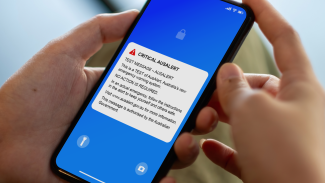
Critical Alerts are used for the most dangerous, life-threatening situations. These are intrusive, have a fixed volume and cannot be opted out of

Priority Alerts can be opted out of or adjusted through your device settings, including volume and vibration.

Read more about:

Myth 5: “AusAlert only works in cities.”

Myth
Remote and regional communities won’t benefit.

Fact
AusAlert works wherever there is mobile coverage.

AusAlert uses the same 4G and 5G coverage as existing mobile services. Where there is an active cell tower, compatible devices can receive an alert – including in regional and remote areas. 

Landline messaging will continue through existing systems and is intended to be included in AusAlert over time, ensuring people without mobile phones are still supported.

Myth 6: “Tests mean something has gone wrong.”

Myth
If you receive a test alert, there’s a real emergency.

Fact
Testing is essential – and clearly labelled.

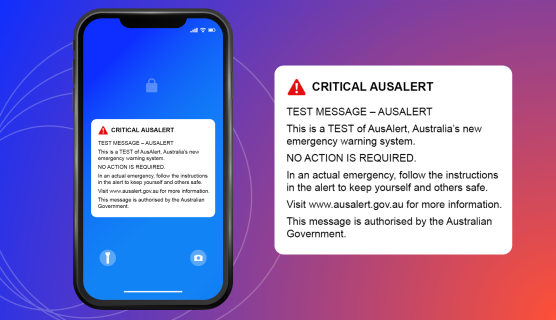
Before AusAlert goes live nationally, it will undergo community testing from 10 to 21 June and a national test on 27 July. All test messages will clearly state they are a TEST ONLY, and no action will be required.

Testing helps ensure the system works across different devices, locations and scenarios – before it’s needed in a real emergency.

Visit ausalert.gov.au to read more about:

The bottom line

If you receive an AusAlert:
Stop. Read it. Follow the instructions.

AusAlert is designed to deliver the right message, to the right people, at the right time – when it matters most.