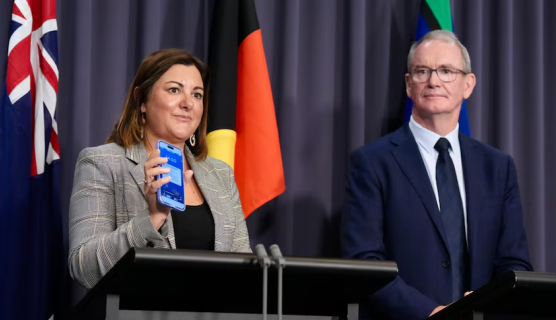
Susan Graham-Ryan: Well, you've likely been hearing a lot about the AusAlert message that you'll be getting on your mobile on Monday at 2pm. I'm going to play the sound for you now just in case you will get a little bit frightened by it. [ALERT PLAYS]. It'll sound something like that. This new AusAlert system is being coordinated by NEMA, that's the National Emergency Management Agency, and is planned to replace the old text messaging system. Deputy Coordinator General for Emergency Management and Response Katarina Carroll is with me now. Morning Katarina. Thanks for your time today.
Katarina Carroll: Good morning Susan, and lovely to be speaking to you this morning.
Susan Graham-Ryan: So, tell us how this AusAlert message notification will work.
Katarina Carroll: Thank you, and it is important to get the message out, and thank you for playing the siren. That will be played at 2pm on Monday 27th of July, next Monday. We will be sending a critical alert out. So, AusAlert has two alerts, priority and critical. We've tested priority in nine communities across the nation and now the national test will be at critical. So, your mobile device will vibrate and get a loud siren warning for 10 seconds. So, it will override silent and do not disturb, but obviously cannot override if the phone is turned off or it is in aeroplane mode. It is important to note, and I think, Susan, you've touched on this, that this will be replacing as of next year on the 1st of July, the current text based system, which does have its limitations, it certainly does get congested when you send out a lot of messages. And this is actually based on cell tower technology, so very, very different technology. It sends instantaneous messages to your mobile phone.
Susan Graham-Ryan: So, do we have to do anything when that notification happens or doesn't happen?
Katarina Carroll: No, you don't have do anything. We do know that most mobile phones will be compatible. We know from Apple devices, 80% will receive this based on the devices running iOS 26.4 and above. And also Android devices, we know that Android 12 and above, there's 15 million out there that are able to support AusAlert. So, we expect a lot of people to be getting these messages next week.
Susan Graham-Ryan: 80% is a high number, but it's still kind of low if we're trying to get everybody, is it, is it not?
Katarina Carroll: This is actually just an additional tool to those already that are available, and one of those is obviously the ABC that we just depend heavily on to get those emergency messages out. So, this is one tool in many, many tools that you have in your suite and certainly from like nations and there's 35 other countries using this, we have found that many nations had a lower compatibility and increased dramatically when they started using this. So, we started a very high percentage and we expect it to increase.
Susan Graham-Ryan: So, in regional, rural and remote parts of Queensland we know that 4G is limited. We know before, during and post incident telecommunications towers are frequently impacted and often de-energise because they're inundated or the generators run out of power. Through what means will AusAlert be sent out to ensure that everyone who is supposed to receive this will actually receive it.
Katarina Carroll: So, we've done already nine community tests across the nation and we particularly tested remote areas, Tennant Creek in Northern Territory as well as Goomalling in Western Australia. So, the strength of this technology is, irrespective of what telco you are with, it will pick up on any telco tower that's in the area and send the message to your phone. So, it's not telco dependent, it's telco agnostic.
Susan Graham-Ryan: What about satellite? Is satellite an option to also send these through to make sure that everybody in the catchment gets them if they're maybe not under a tower for example, or WiFi is out?
Katarina Carroll: So, that's an excellent question. That is one of the future enhancements that we are looking at. So, to date it is the cell towers but into the future that is definitely one of the enhancements. And I think also, Susan, it's so important to mention that we still have AVM, that's the automated voice message going to your landlines. That will continue to the 1st of July next year and we're looking at other options for landline voice messaging into the future as well.
Susan Graham-Ryan: What about, Katarina, for people who might have a disability, maybe they're blind or have low vision or they may be deaf or hard of hearing. What are some of the strategies that are in place to make sure everybody who needs to get the messaging is getting the messaging?
Katarina Carroll: So, we're working closely with all of our peak bodies and experts, be it with domestic violence, or disabilities. A lot of the information is on our website. We have worked closely with them over the last couple of years and particularly in the domestic violence space. You know, our message is to turn your phone off for an hour before and an hour after, but certainly if you're really concerned about your safety, to leave that off for a 24 hour period. So, we are informed, with regards to disabilities, domestic violence, all of those issues by expert people in those areas, and we actually work closely with them to inform the public.
Susan Graham-Ryan: Hearing from the Deputy Coordinator General for Emergency Management and Response with NEMA, Katarina Carroll. Can we set the record straight on a few things very quickly? What will happen if you are overseas when this trial and test is happening?
Katarina Carroll: You will not get the message overseas because it does depend on cell-based towers. So, it will only happen if you are within those towers that you will receive that message.
Susan Graham-Ryan: What about international visitors who are here?
Katarina Carroll: Yes, definitely. If your mobile is compliant and not touched on the ones that are compliant, if you come within those cell towers, you will get those messages.
Susan Graham-Ryan: Can you opt out?
Katarina Carroll: You can opt out if you turn the phone off or if you are on aeroplane mode, other than will override, silent and do not disturb only if you're in that critical test, which will only be used when we require to get a message out about imminent threat to life and property.
Susan Graham-Ryan: How will you know if everybody has received it that is supposed to receive it?
Katarina Carroll: So, obviously, we rely on our telcos to give the information about how successful the towers were to distribute that. And we found from working with the telcos and the technical people within those bodies, that up to 90% to 100% in all of those communities, the cell towers did push those messages out to the compatible phones within those areas.
Susan Graham-Ryan: There are a lot of theories online. Katarina, what are some of the biggest misconceptions that you've heard reported or claimed about AusAlert?
Katarina Carroll: Oh, look, there are some, there are a lot of misconceptions out there. You know, we've heard things like wrap it in al-foil, put your mobile in the microwave oven, the government is listening to you. Please, please, this is really about your safety. This is another tool to make sure that you are safe in emergency situations. It does not record your name, your telephone number, it doesn't ask for personal information, it doesn't send you any links. This is purely giving you life saving information to make sure that you are safe.
Susan Graham-Ryan: So, if people on Monday do not receive this alert, what should they be doing?
Katarina Carroll: So, we encourage that if they don't get the message to hop on ausalert.gov.au there will be a survey there to fill it out. But certainly, compatible phones and really updating your phone is critically important not just to get AusAlert, but that is critically important to keep your phone safe from any cyber issues as well. So, update your phone and compatible phones, you should be getting this message.
Susan Graham-Ryan: Katarina, please accept my apologies before I say this, because I am very sceptical, because I've lived in regional Queensland for a very long time and we do often anticipate that there's going to be things that don't work. What's going to happen between the period between the test and the official rollout to ensure that this system is reliable and safety focused.
Katarina Carroll: So, the national test is incredibly important for this. It will be at scale, it will be at speed and this purposely, we have done this to see where the gaps are, what do we need to learn and what do we need to implement by the time we go live on the 1st of October. So, those learnings will be implemented to make sure that we make those enhancements. But on top of that, some 1300 people around the nation will be trained in using this over the next few months as well. So, that period is incredibly important, post the test, next week.
Susan Graham-Ryan: If things go awry, will the rollout be delayed?
Katarina Carroll: We expect that things won't go awry, but always, there are learnings to be had, and the reason why I say that, is because we've already had nine community tests across the nation and they're actually very successful. The one in Cairns was in the Port Douglas area and if it does go awry, obviously we will look at what needs to be done to enhance it and decisions we've been making will be made out going forward.
Susan Graham-Ryan: Deputy Coordinator General for Emergency Management and Response, Katarina Carroll. Thank you very much for your time today.
Katarina Carroll: Thank you, Susan.