Nikolai Beilharz: Sticking with the weather and emergency concerns, a new way of alerting you to an emergency may well soon be on your way to your phone. There's testing coming up of the Commonwealth's AusAlert emergency warning system that'll be happening later on this year. National Emergency Management Agency, Deputy Coordinator-General for Emergency Management Response, that is a title, Katrina Carroll. Good afternoon to you,
Katarina Carroll: Nikolai, how are you?
Nikolai Beilharz: Good, good, good. If people have never heard of this AusAlert system, what is it?
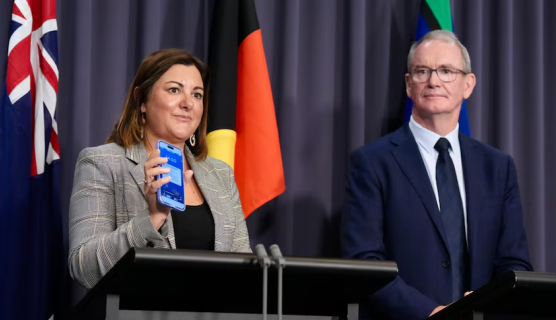
Katarina Carroll: Yeah, it's pretty exciting. Yesterday, with the Minister for Emergency Management, Kristy McBain, we launched, as you said, AusAlert. It actually is a new national messaging system that will use different technology to what we are used to, cell broadcast technology, to send targeted emergency messages to all compatible mobile devices. So, emergency agencies and the Australian government will be able to send near instant messages to all devices across the nation or to specific areas, right down to about 160 metre accuracy. So, it really is about keeping the community informed about emergencies to make really good decisions.
Nikolai Beilharz: And what kind of breadth of emergencies are we talking about? Is it things like fires and floods or is it broader than that?
Katarina Carroll: Yeah, definitely. It's definitely natural hazards, fires and floods. It can be used for public safety, say you have a biodiversity incidents, so there can be broad application, but definitely has to be associated with an emergency.
Nikolai Beilharz: And it's right to say that from the user point of view, you don't need to download an app or anything. This just gets sent straight to your phone.
Katarina Carroll: Yes, it does. It gets sent straight to your phone. It's very different to how you receive the messages now. It, basically they will appear on lock screens on mobile devices and exist outside of the standard text message that we now receive. So, it will just come straight to you. There will be two types of alerts. One will be critical, which will come with an intrusive sound and an alert at a fixed volume, and there'll be a less intrusive one called a priority alert.
Nikolai Beilharz. So, for the critical one that has the intrusive sound, is it something akin to a kind of a siren?
Katarina Carroll: Yes. So, you know, an ambulance or a police or foreign emergency services siren. It will last for a number of seconds and it will also come with a vibration as well.
Nikolai Beilharz: Does it override if your phone is on silent?
Katarina Carroll: Yes, it will override that. Certainly, will override that. And as I said, that is more intrusive. You cannot opt out of that one because that relates to imminent threat to life and property. Whereas the less intrusive one, which you can opt out of, that is more around advice and watch and act.
Nikolai Beilharz: Right, okay, and so there's testing that will be taking place. What's happening on that front?
Katarina Carroll: Extensive testing will take place in June of this year in every state and territory. In fact, in South Australia, the test will be in Port Lincoln and prior to that time there will be extensive media communication, advertising and information to the community ahead of time.
Nikolai Beilharz: And then is there, am I right saying in July there's one that will go everywhere? Is that the plan?
Katarina Carroll: Yes, there is. There's a national test. Obviously, a national test will be at different times, depending on where you are at the country, but we're sending the test at the one time, so it will happen in South Australia at 1.30pm Adelaide time on 27 July this year.
Nikolai Beilharz: And that's literally, if all goes to plan, everyone's phone will have that alarm and presumably a caveat saying, this is just a test.
Katarina Carroll: Yes, definitely. There will be a lot of advertising ahead of time to notify people that it is a test. Interestingly, we will just say, you know, if there was like there were many people in one room at that, you know, that time. Yes. All the mobile phones should be going off at the same time.
Nikolai Beilharz: Right, and is in terms of once this system comes into place, who's in charge of deciding that a message is at that critical level or the slightly less critical level, is that done at a kind of a state agency or is it managed federally?
Katarina Carroll: Yes, definitely. In every state and territory, emergency services, you know, obviously manage their emergencies. So, that sits with state and territories. That already happens. There is already an SMS system in place, so there will be people trained across emergency services, police, fire, across all states and they will be able to use this. But certainly, it sits with just a number of people within those agencies that are trained in it and that can actually have the authority to make those decisions.
Nikolai Beilharz: I'm not sure if this is something that you've come across or why someone might want to do this, but is there the potential to opt out of it or is the idea that this is so serious you're just going to get the message?
Katarina Carroll: Definitely, for the critical alert. Critical alert is imminent threat to life and property. So, it is incredibly important that people receive that message. You can opt out of the second alert, which obviously is for just advice or watch and act definitely from that, but in terms of the critical alert, that cannot be opted out of.
Nikolai Beilharz: Ok. Katarina, Carol, thank you so much for explaining it to us this afternoon.
Katarina Carroll: Thank you, Nicola.
Nikolai Beilharz: Lovely to chat to you, Deputy Coordinator General for Emergency Management and Response at the National Emergency Management Agency.