Prepare for the AusAlert national test on 27 July 2026

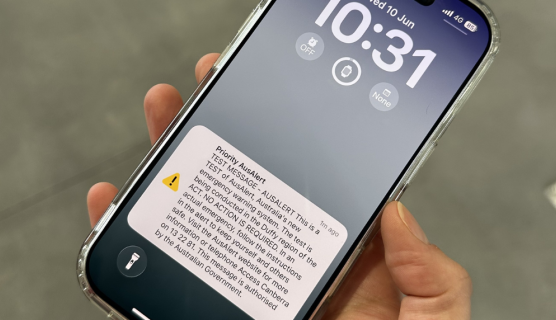
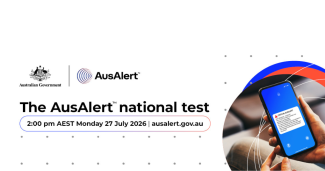
Banner image with Australian Government and AusAlert logos at top left, a photo of a hand holding a phone with an AusAlert test on the screen, and text that says, The AusAlert national test. 2 pm AEST Monday 27 July 2026. ausalert.gov.au
On this page

Prepare for the AusAlert national test on 27 July 2026

Banner image with Australian Government and AusAlert logos at top left, a photo of a hand holding a phone with an AusAlert test on the screen, and text that says, The AusAlert national test. 2 pm AEST Monday 27 July 2026. ausalert.gov.au
Written
  • News
  • Preparedness

We’re testing Australia’s new national warning system, AusAlert.

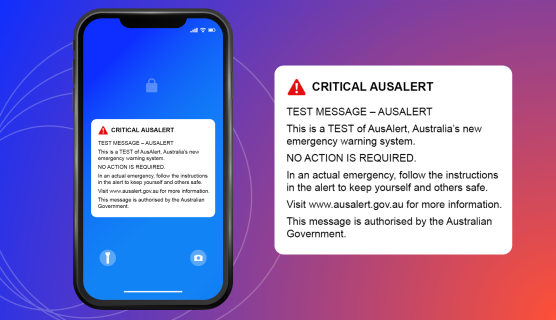
On Monday 27 July, we’ll be sending a test alert to all compatible mobile devices in Australia as part of the AusAlert national test.

Compatible devices include most smart phones, smart watches and tablets.

AusAlert uses cell-broadcast technology through active 4G and 5G mobile networks.

We need to test AusAlert to make sure it works as intended before it launches in October 2026. In June, we successfully tested the system in 9 communities across Australia.
National test – Monday 27 July

The test alert will be sent to all compatible devices in Australia at the same time on Monday 27 July. See the test time in your location below:

  • Australian Capital Territory – 2pm AEST
  • New South Wales – 2pm AEST
  • Queensland – 2pm AEST
  • Tasmania – 2pm AEST
  • Victoria – 2pm AEST
  • Northern Territory – 1.30pm ACST
  • South Australia (including Broken Hill) – 1.30pm ACST
  • Western Australia – 12pm AWST.

Make sure your device is AusAlert ready by updating it with the latest software version before the national test.

If you receive the AusAlert national test

The message will clearly say it is a test. You don’t need to take any action.

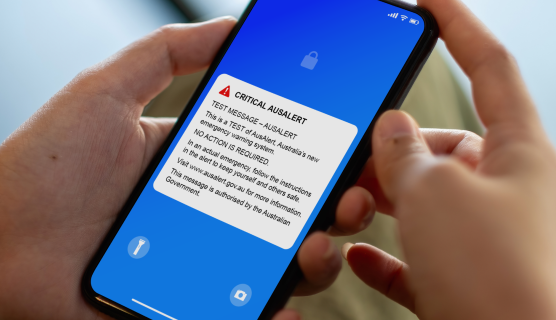
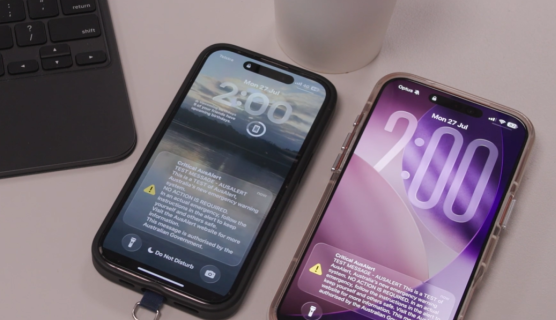
The national test will be a Critical Alert. Your mobile device will vibrate and make a loud siren-like warning sound that lasts about 10 seconds. Your device screen will wake up to show the message.

You can’t opt out of receiving Critical Alerts. Your device will vibrate and make the sound even if it is on ‘silent’ or ‘do not disturb’.

If receiving the AusAlert national test will disrupt you or cause you or someone you know to feel unsafe, turn your mobile devices off or switch them to ‘aeroplane mode’ before the scheduled test time in your location and leave them off for at least one hour. 

If you don’t receive a test AusAlert

If you don’t receive a test alert, don’t worry. You don’t need to do anything. Your device might not be compatible, it may not have the latest software update, or maybe it wasn’t connected to a mobile tower at the time of the test.

During testing, people may have different experiences depending on their device, mobile network, settings and exact location at the time of the alert.

Some people may receive the alert immediately, some may receive it later, and some may not receive it at all.

The purpose of testing is to understand these real-world differences, confirm the system is working as intended, and improve public information before AusAlert is used in real emergencies.

After the test, you can provide feedback via the contact form on the AusAlert website.

AusAlert is just one channel. In an actual emergency, we strongly recommend using multiple channels for emergency information. Continue to check local TV, radio, emergency apps and websites for updates.

Information and resources

Tailored information materials are available for:

If the siren-like alert could make you or someone you know feel unsafe, see information about staying safe with AusAlert.

AusAlert is designed to help keep people informed when it matters most. To get ready for the national test, check your device is up to date and visit ausalert.gov.au for more information.