Numurkah Staff Ride: a rollercoaster of lessons

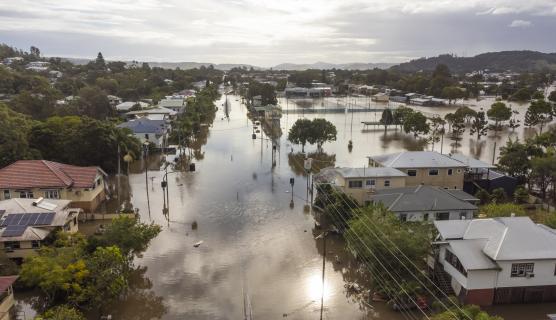
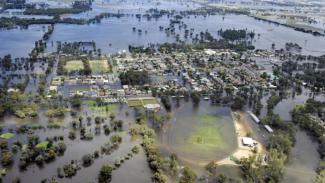
Aerial photo of Numurkah town completely flooded
On this page

Numurkah Staff Ride: a rollercoaster of lessons

Aerial photo of Numurkah town completely flooded
Written
  • Case study
  • VIC
  • Resilience and risk reduction
  • Flood

About 250km north of Melbourne lies the town of Numurkah, with a population of roughly 12,500 people and host to one of the state’s most significant flood emergencies.

Between 28 February and 4 March 2012, about 300 millimetres of rain fell across northeast Victoria. Early forecasts pointed to flooding near Wangaratta, around 100km east of Numurkah, prompting emergency resources to mobilise toward communities along the Ovens River. Meanwhile, the threat building along Broken Creek was underestimated. In the early hours of 4 March, Broken Creek overtopped at record levels more than 24 hours earlier than anticipated. 
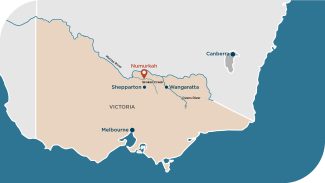
Map showing Numurkah north of Melbourne near the VIC-NSW border.

This flood was one of the highest on record, but what made it especially dangerous was its speed. Floodwaters peaked at Numurkah just 14 hours after peaking at Katamatite (about 25km along Broken Creek to the east). In previous flood events, this same journey took up to 5 days. The result was catastrophic: more than 160 buildings were inundated, Numurkah Hospital was evacuated, major roads were cut, and the town was effectively isolated with almost no notice.

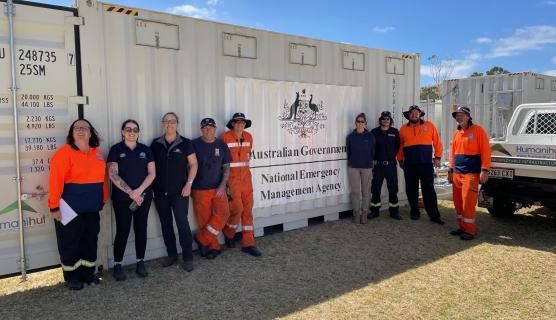
Every October, the National Emergency Management Agency’s Coordination and Planning Officers (CPOs) journey to Numurkah for the Numurkah Staff Ride, an immersive training session. This activity allows participants to experience firsthand the conditions and decision-making involved in the 2012 Numurkah flood event, providing valuable learning and reflection opportunities. 

Reflecting, not judging

Those taking part in the Staff Ride discover that multiple challenges intensified the effects of the flood.

At the time, Numurkah did not have a local flood gauge, limiting accurate real-time data. As a result, the local Incident Management Team was not well informed or staffed. Communication between field crews, sector commanders and the Incident Management Team was fragmented. Community warnings were not issued in time, emergency responders were not pre-deployed to the impact area, and local State Emergency Services and Country Fire Association volunteers were already fatigued from ongoing operations.

These weren’t failures of commitment or intent, but show us how rapidly changing conditions, limited information and human factors can all converge during emergencies.

As our CPO Jess Meilak said, “The Numurkah Staff Ride brings this scenario to life. It’s not about judging past decisions, it’s about reflecting and learning from them.”

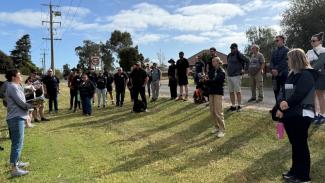
Photo of a group of people standing around on a grassy area beside a road, listening to someone speak.

Participants of the 2025 Numurkah Staff Ride during one of the stops in the exercise

By visiting key sites impacted by the flood and hearing directly from those who were there, including operational leaders and incident decision-makers, participants gain invaluable insights into how decisions were made under pressure, and how quickly a seemingly manageable situation can escalate into a dangerous and complex emergency.

A key theme throughout the experience is that no 2 floods are ever the same. What worked before may not work again, and even familiar hazards can behave in unexpected ways.

A multi-agency experience

The strength of the Numurkah Staff Ride lies in its collaborative approach. Participants come from a wide cross-section of the emergency management sector, including: 

  • Victoria State Emergency Service staff and volunteers
  • Emergency Management Victoria
  • Bureau of Meteorology
  • Country Fire Authority staff and volunteers
  • Life Saving Victoria volunteers
  • National Emergency Management Agency

Together, they share perspectives, challenge assumptions and reflect on how collective decision-making can be strengthened when it matters most.

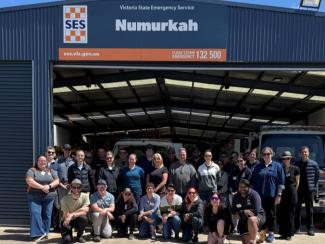
Photo of a large group of people looking at the camera, outside a large shed with SES Numurkah sign above the open roller door.

Participants of the 2025 Numurkah Staff Ride at the local State Emergency Services base

Why the Numurkah Staff Ride matters—lessons for the future

Through understanding the history of the 2012 flood, the Staff Ride encourages participants to reflect on their own approaches to incident management. It also highlights the significant improvements made in emergency management since, including advances in technology, communications and response capability.

For NEMA, participation in this multi-agency learning experience reinforces our commitment to continuous learning and leadership in emergency management. Our CPOs are deployed as NEMA Liaison Officers during emergency response operations, and experiences like the Numurkah Staff Ride help build a shared understanding of key hazards and strengthen relationships across agencies. This ensures we’re better prepared to support communities during future crises that require Australian Government assistance.

The Numurkah Staff Ride is a powerful reminder that learning from the past is one of the most important tools we have to help protect communities in the future.

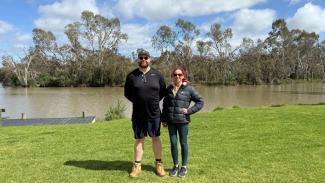
Photo of two people standing next to each other looking at the camera, on a grassy area with a river in the background and gumtrees on the far shore.

Caption: NEMA CPOs Joel Farrow and Jess Meilak during the 2025 Numurkah Staff Ride