
Insurance plays a vital role in protecting homes, businesses, and communities across Australia. That’s why the Hazards Insurance Partnership (HIP) brings together insurance industry leaders and the Australian Government to tackle the biggest challenges facing our insurance market.
Hazards Insurance Partnership milestone reached
On this page
Hazards Insurance Partnership milestone reached
Understanding the challenges
Many Australians are finding it harder to afford insurance. Climate change is causing more frequent and severe storms, floods, and bushfires. At the same time, the demand for new housing is rising, property values keep going up, and costs continue to climb due to inflation and supply chain issues. All these factors are pushing insurance premiums higher and making it tough for some people in high-risk areas to get affordable coverage. This protection gap means that, after disasters, some families and communities can’t recover as quickly as others.
What are the guiding principles for resilience investment?
The HIP has developed a set of guiding principles for resilience investment. These principles provide a foundation to help guide decisions about where and how to invest to make our communities safer and stronger. By focusing on risk reduction, these efforts may be considered by insurers in their assessment of risk. Here’s what the guiding principles are all about:
- Collaborating across governments, industry, and the community to prioritise mitigation investments with the biggest impact.
- Addressing risk through both household and community-level mitigation, recognising that different approaches may be needed.
- Recognising risk reduction activities in insurance pricing and availability.
- Balancing administrative effort, data-driven decision-making, and compliance with competition laws, while maintaining transparency and supporting competitive insurance markets.

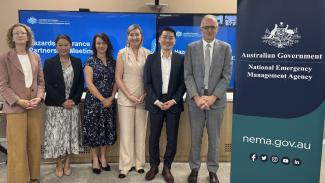
The 12th HIP meeting, held in Canberra on 13 March 2026.
How do these principles benefit you?
These guiding principles are designed to make a real difference for everyday Australians. By directing investment toward safer homes and infrastructure that protects communities, we can help keep insurance available and affordable for more people. When communities are better protected from disasters, we can reduce harm and families can recover faster. Over time, better targeted investment will put downward pressure on insurance premiums.
In short, the guiding principles give governments, insurers, and the public a clear path to take action. They complement existing strategies that exist to protect Australians. This includes the National Resilience Action Library which brings together resources that help homeowners reduce the impact of bushfires, floods and tropical cyclones on their properties. on their properties.
Looking ahead
The HIP is committed to working together for a safer, stronger future.
According to The Hon Josh Wilson MP, Assistant Minister for Emergency Management, “By working together through the Hazards Insurance Partnership, governments and insurers are working to guide smarter investment in resilience that delivers benefits for households, communities and the broader economy.”
For additional details, please visit the Hazards Insurance Partnership webpage.
Related articles
-
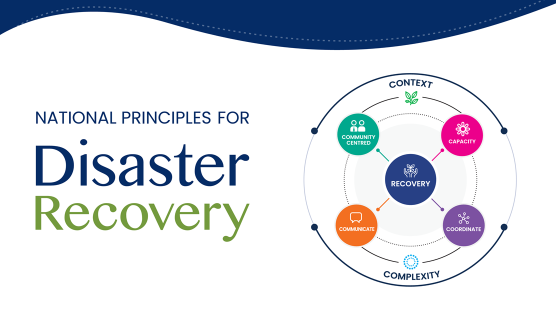 Updated National Principles for Disaster Recovery have been releasedThese principles can be used by communities, governments and recovery agencies to guide our efforts and decision-making in disaster recovery.
 -
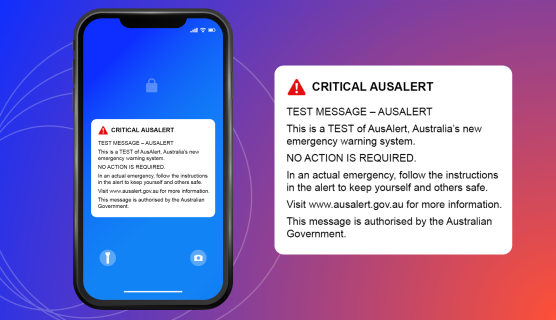 Understanding AusAlert and the national testWe're tackling a few more myths about AusAlert.
 -
 The Rating Scheme helping households stay safe and save moneyPractical tools helping households understand their risk and take action.
 -
 AusAlert community tests completeIn June, we ran localised trials of the AusAlert system.
 -
 Exercise Nexus 2026: Putting our preparedness to the testOne of the most effective ways we prepare for crises is through crisis exercising.
 -
 Building more inclusive emergency management in AustraliaDuring disasters, people with disability face a higher risk of death, injury and neglect.
 -
 Prepare for AusAlert community testing in JuneBefore AusAlert is ready to use in October 2026, it will be tested across Australia
 -
 Embedding First Nations knowledge into Round Four of the Disaster Ready FundApplications are now open for Round Four of the Disaster Ready Fund.
 -
 Reflections from the 2026 NIDR GatheringThe multi-day event celebrated Indigenous leadership in emergency management, community recovery, disaster resilience, and Caring for Country.
 -
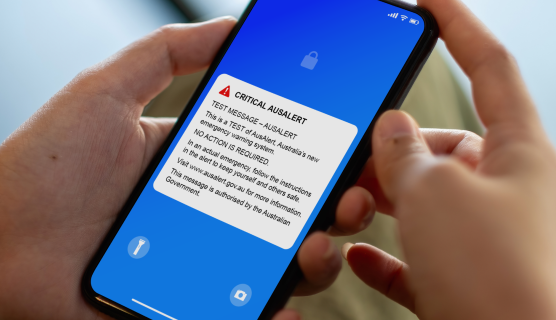 Understanding AusAlert – the new national warning systemWe're busting some myths about AusAlert.