Autumn 2026 bushfire and severe weather preparedness: national response and outlook

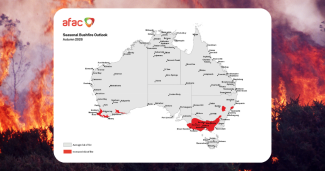
Map of Australia showing areas with an increased risk of fire in red. Includes the corner of South Australia around Mount Gambier, most of Victoria except for the very northwest around Mildura and east from Bairnsdale. New South Wales includes north of Canberra down on the western side of ACT (the Brindabellas) to the Victorian border. Also an area to the east of Dubbo and another on the coast just north of Newcastle. In Western Australia, patches around Albany, Esperance and Margaret River are red.
On this page

Autumn 2026 bushfire and severe weather preparedness: national response and outlook

Map of Australia showing areas with an increased risk of fire in red. Includes the corner of South Australia around Mount Gambier, most of Victoria except for the very northwest around Mildura and east from Bairnsdale. New South Wales includes north of Canberra down on the western side of ACT (the Brindabellas) to the Victorian border. Also an area to the east of Dubbo and another on the coast just north of Newcastle. In Western Australia, patches around Albany, Esperance and Margaret River are red.
Written
  • News
  • Preparedness

As we head into Autumn 2026, the higher risk weather season (HRWS) is still active. The latest Seasonal Bushfire Outlook, released by the Australasian Fire and Emergency Service Authorities Council (AFAC), shows the risk of bushfires and severe weather remains high in several regions across Australia. It highlights the need for ongoing vigilance and coordinated response efforts.

The outlook forecasts a higher risk of fire in parts of southern, central, and eastern New South Wales, as well as most of Victoria and parts of southeast South Australia. In Western Australia, the southern Jarrah Forest, Warren, and areas of the Esperance Plains-Mallee bioregions are also expected to face a higher fire risk.

Being prepared

NEMA stands ready to assist those impacted by disasters, whether they are ongoing crises or communities still recovering from events earlier this season. Our collaborative approach ensures we work together with state and territory governments, as well as local communities, to provide practical and timely support.

Key actions NEMA has taken this HRWS

  • We have activated our Crisis Coordination Team to bolster planning and facilitate a seamless Australian Government response to severe weather events of national significance. By embedding NEMA officers in several states and territories, we’re ensuring clear communication and strong cooperation with affected communities throughout the HRWS.
     
  • To keep everyone aligned, we have convened the National Coordination Mechanism 4 times so far this season. These meetings bring together authorities from across the Australian Government for up-to-date situational awareness and operational coordination.
     
  • We’re supporting Disaster Relief Australia in Victoria, where volunteers are helping communities recover from bushfires. In South Australia, we provided emergency accommodation for firefighting personnel, working alongside the Australian Defence Force and using the National Emergency Management Stockpile.
     
  • We have activated a range of disaster assistance measures under the Disaster Recovery Funding Arrangements. This support, delivered jointly with the Tasmanian, Queensland, Victorian and Northern Territory Governments, is helping communities bounce back from both bushfire and flood events.
     
  • The Australian Government Disaster Recovery Payment and Disaster Recovery Allowance are available for areas significantly impacted by bushfires and floods, ensuring affected Australians can access immediate financial support when it matters most.

Australia’s weather can change rapidly, and dangerous conditions can arise even in regions not identified as at higher risk. NEMA encourages all Australians to stay prepared, listen to local authorities, and access reliable information sources throughout Autumn. We remain ready to stand with communities before, during and after disaster strikes.

Further information about the Seasonal Outlook collection is available on the AFAC website.