Each year, National Reconciliation Week provides a focus for Australians to reflect on our shared histories, cultures and achievements. It’s also an opportunity to consider the role each of us plays in progressing reconciliation every day. For us, National Reconciliation Week is a chance to reflect on and reaffirm our commitment to respectful partnerships in emergency management and meaningful engagement with First Nations Peoples and communities.
We’re All In for National Reconciliation Week 2026
On this page
We’re All In for National Reconciliation Week 2026
Why National Reconciliation Week matters to NEMA
First Nations people have a unique knowledge of Country. This knowledge helps communities prepare for dangerous weather and protect them from its impacts.
Earlier this year, we appointed Assistant Coordinator-General Karina Menday as our First Nations Champion. “We know that First Nations communities are more often, and more acutely, impacted by disasters. Ensuring that our work, what we do, and how we do it supports those communities is a critical part of NEMA’s role.”
The theme for National Reconciliation Week 2026, “All In”, is a unifying reminder that First Nations voices must be meaningfully included in disaster planning and emergency management. This ensures decisions are culturally safe, locally informed and effective. We remain committed to this goal and to delivering on our commitments under the National Agreement on Closing the Gap.
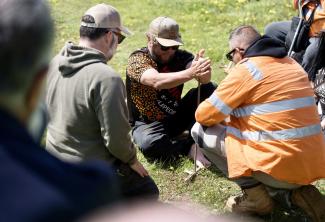
Kaurna Fire Team Pakapakanthi Cultural Burn. Photo: City of Adelaide
Our commitment to advancing reconciliation
At the beginning of May, we attended the 2026 National Indigenous Disaster Resilience (NIDR) Gathering. This experience provided us with valuable insights into how we can support more inclusive and locally informed outcomes across Australia. It also highlighted the importance of listening to communities and connecting local knowledge with national policy.
We are working closely to support the National Indigenous Disaster Resilience program at Monash University in the development of its National Indigenous Disaster Resilience Framework. This work will provide an evidence-based policy framework for guiding Indigenous disaster resilience policy and practice across Australia.
The Disaster Ready Fund (DRF) recognises that First Nations voices are critical in disaster planning to understand which places are culturally important, where support may be needed, and how to respond in ways that respect community and culture. To date, about $90 million has been committed under the DRF to 31 projects being led by or delivered in partnership with First Nations-led organisations.
This time last year we released our first Reconciliation Action Plan (RAP). This is a roadmap that is building strong foundations to guide us in walking alongside First Nations Peoples with respect, honesty and a commitment to advancing reconciliation. This week is also an opportunity to reflect inward and examine our employment pathways and how we can continue to foster a more diverse and inclusive workplace for First Nations Peoples.
All In for 2026 onwards
Reconciliation is a journey that needs participation, learning and action from all of us. We are committed to embedding First Nations voices in our work every day to help ensure our policies and disaster responses are culturally informed. Through this we hope to help address the disproportionate impacts of disasters on First Nations communities.
We are committed to listening, learning and embedding reconciliation within our agency and the broader emergency management community.